30 September 2026
Era Pickleball: The Local Pickleball Club You’ve Been Missing
Presented by @andysjxc506
Every Sunday, the sun climbs over the rooftops and hits the polished lines of the Era Pickleball courts the moment I pull into the lot. I’ve played at a dozen clubs across three states, chasing the feel of a weekend ritual that could sustain a season. Era Pickleball isn’t just another club with a neat logo and a few indoor courts. It’s the kind of place that grows on you, with a quiet confidence born from consistent play, well-maintained facilities, and a sense that every person you meet there has chosen to put in the work, on and off the court.
What makes Era Pickleball so vivid, so stubbornly memorable, is not a single feature but a constellation of details that add up to a club you don’t want to quit. The indoor courts buzz with the energy you feel when a crowd understands the rhythms of a fast rally. The outdoor courts soak in the late-afternoon light in a way that compels you to stay for one more game, even when the sun sinks and the air grows just a shade cooler. And the people, the people are the heart of it. They show up with stories—the retired teacher who slows the game down to illustrate footwork for a beginner, the college athlete who uses a drill to chase down balls that don’t exist in ordinary parks, the parent juggling practice schedules with a smile that makes you want to stay and chat after a set.
If you’re chasing a pickleball experience that blends competition with community, Era Pickleball in your city could be the missing piece you didn’t realize you were searching for. The club has built its identity by leaning into what most players want: accessible courts, reliable scheduling, a culture that respects both the novice and the veteran, and a leadership that isn’t chasing trends so much as sustaining a durable, year-round pickleball habit.
What Era Pickleball does well starts with its facility design. Indoor pickleball courts become a sanctuary for bad weather days or intense winter blocks when outdoor play isn’t feasible. The indoor spaces at Era Pickleball are bright, with clean lines and courts that feel snappy under foot. They’re not cavernous arenas. They’re intimate enough to hear your doubles partner’s whispered cues while still offering the space you need to move without tripping over a stray bag or a committee of wheels from the equipment staff. That kind of environment matters because a well-tuned indoor space lowers the cognitive load on players. You can focus on patterns, not on whether you’ll twist an ankle stepping off a slippery edge.
The outdoor side of Era Pickleball, when weather permits, creates a complementary rhythm. The courts sit near trees that somehow appear to pick up the pace of the ball, making for longer rallies and more dramatic drop shots. The surface texture, the way a ball bites and springs up just enough to reward a well-timed paddle angle, matters as much as the surrounding greenery. It’s the kind of setting that nudges players toward a slightly more deliberate pace than you’d expect from a compact urban facility. You can hear the ping of paddles in the air, see the wear on the lines where players practice consistency, and feel the sense of belonging that comes from sharing a schedule with friends you haven’t met yet.
Entering Era Pickleball isn’t about choosing between indoor or outdoor; it’s about recognizing that both environments sharpen different facets of your game. A typical afternoon might begin with a warm-up on indoor courts before switching to an outdoor session as the sun lowers and the breeze shifts. The club’s programming supports that flexibility, offering a mix of open play, structured clinics, and seasonal leagues that keep players moving through the calendar. The result is a rhythm you can adapt to, whether you’re building a weekend routine around a few hours of play or carving out a longer stretch to train for a tournament.
If you’re new to Era Pickleball or if you’re considering moving your current pick-up routine into a more organized setting, you’ll want to know what makes this club different in practical, everyday terms. The first thing that stands out is the clarity of the member experience. Signing up isn’t a black-box transaction. You’ll hear about the membership structure, which balances access with predictable scheduling. There are sensible tiers, designed to accommodate players who want to drop by occasionally and others who are ready to commit to regular play and community involvement. The sign-up desk is friendly, not pushy, and the staff takes the time to explain the benefits of different memberships, including access to clinics and exclusive events. It’s a small detail, but when you’ve stood in line at clubs where the process feels more like a shopping experience than a service, that approach feels almost revolutionary.
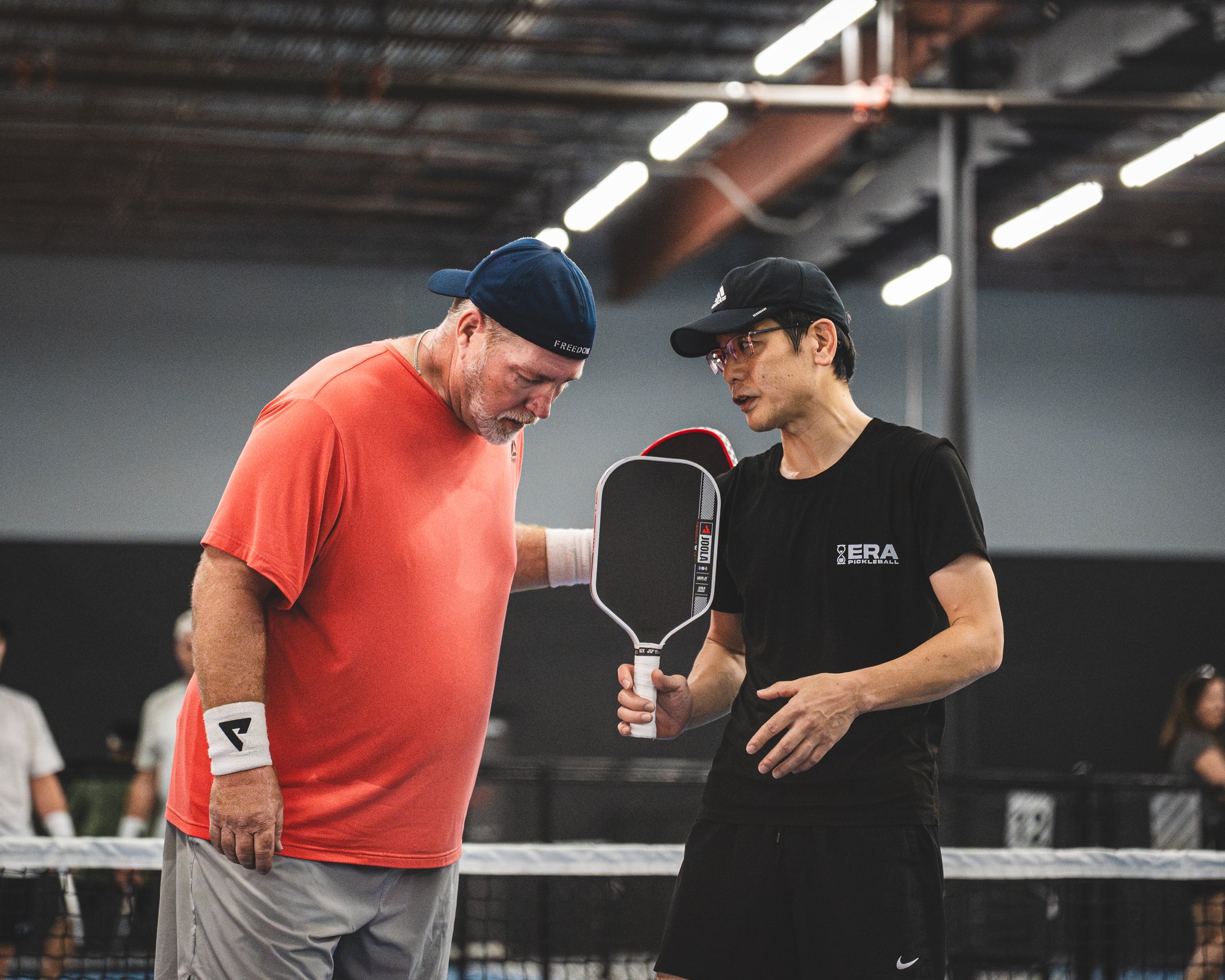
The coaching and programming at Era Pickleball are another anchor for the experience. The club has built a reputation for approachable instruction that doesn’t talk down to beginners while offering strategic depth that keeps intermediate and advanced players engaged. You’ll see a mix of private lessons, semi-private sessions, and group clinics focusing on fundamentals like dinking technique, footwork patterns, and strategy on different surfaces. The instructors bring real-world knowledge—stories from tournaments, insights about recovery, and pragmatic drills that translate to the match you’ll actually play on Saturday. The best clinics feel like a conversation with a patient mentor who has been where you are and can guide you through the awkward spots with concrete cues and a plan you can actually execute.
Social dynamics also matter here in a way that doesn’t feel contrived. Era Pickleball has naturally created a community where matchups develop organically, where players rotate in and out of doubles pairs with ease, and where the gym-floor camaraderie you expect from a serious club exists without a sense of cliquishness. On a slow midweek afternoon, you’ll see regulars who know the newcomers by name and greet them with a quick tip or a shared joke about a recent rally. On weekends, the energy takes on a tournament-like pulse without losing the friendly undercurrent that makes competition feel like a friendly challenge rather than a pressure cooker. It’s more about showing up to play and then staying for the afterglow of shared meals, camaraderie, and the sense that your progress is part of a larger story.
A practical frame for understanding why Era Pickleball works for a range of players is to look at the measurements behind the experience. The club prioritizes court availability, which means ample booking slots and minimal wait times during peak hours. It isn’t unusual to see players between sets rechecking the schedule and booking the next slot instantly, which keeps the energy high and the courts consistently in use. For those who are juggling a busy life, the predictability matters. The club’s calendar tends to fill early for popular time windows, but there’s enough cross-flow between indoor and outdoor play that you rarely face a hard shutout. If you are someone who plans around cross-country trips, you’ll appreciate the ability to lock in a block of time for serious practice and still have a flexible fallback when travel plans shift.
As you begin to picture yourself inside Era Pickleball, you’ll probably wonder about the logistics that matter most to day-to-day life. Parking is convenient, with clear signage and easy ingress and egress, which sounds mundane until you’ve spent an afternoon circling a crowded block looking for a spot. The facility strives to keep gear in good order, with paddles and balls that are checked for wear and rotated to ensure consistent performance. Rest areas are straightforward but effective, designed to keep players fresh between games without turning the space into a lounge where you lose track of time. The food and beverage options are a thoughtful after-play addition rather than a distraction. A quick coffee, a protein snack, or a well-timed hydration break can orbit around your schedule without pulling you away from the court for long.
The deeper value proposition of Era Pickleball emerges when you think about the long arc of skill development. You don’t simply come for the courts; you come for the ecosystem that makes practice sustainable. You’ll find routines that fit a six-week block or a full season of play. Coaches design progression tracks that begin with fundamentals and advance toward more complex concepts like poaching reads, strategic pace control, and shot sequencing under pressure. The environment rewards steady improvement. You can measure progress in small, tangible steps: improving your dink accuracy by a few inches, shaving a handful of seconds off your transition time, or building a more reliable off-speed serve that sets up the next rally. When these small wins accumulate, the overall experience becomes transformative.
Another essential component is the culture of feedback. Era Pickleball is not a place where harsh critique goes unchecked; rather, the feedback loop is constructive, direct, and timely. Coaches model how to give feedback that is specific and actionable. Players learn to request adjustments with clarity, which reduces the friction that often comes with coaching. The net effect is a learning environment where athletes push themselves just enough to grow without feeling diminished or singled out. This is subtle, but it changes the rhythm of practice in a meaningful way. You start to hear phrases like, “Try this angle on the return,” or “Shift your weight forward on the drive,” rather than vague comments about intensity or effort. The result is a club where instruction feels like collaboration rather than a performance review.
If you’re evaluating whether Era Pickleball is the right match, consider the practical aspects that often determine whether a club becomes a regular habit. The membership benefits are typically well-structured to align with different levels of commitment. For instance, a casual player might opt for a flexible plan that grants access to open play and select clinics, while a more committed player could choose a full-access package that includes unlimited court time, priority booking for leagues, and a slate of exclusive events. The economics are straightforward enough to justify the investment when you break down the value of consistent practice, the quality of instruction, and the social returns that accumulate over months.
Yet even with all these strengths, Era Pickleball, like every club, has trade-offs worth acknowledging. A bright, well-lit indoor court is a joy, but it can feel confining on a long practice block if you crave the outdoors or a distinct atmosphere. Outdoor play, with its seasonal cadence, exposes players to weather variability, which means you’ll occasionally have to adjust plans due to wind, rain, or heat. The flip side is that the club often provides robust indoor options to counterbalance those disruptions, which makes it possible to maintain momentum even when the sky is unpredictable. For players who anticipate high-intensity travel for tournaments, the surrounding community and the quality of competition at Era Pickleball can be a compelling reason to commit, but you should expect to travel for top-tier tournaments if you’re chasing the highest level of national exposure. The club’s strongest feature—its consistency in quality—also creates a barrier only in the sense that you may find other facilities offering flashier amenities appealing for a moment. If you’re looking for a flashy social scene or a gym-like vibe, Era Pickleball might feel more focused on the game than on spectacle. If your priorities tilt toward a serious practice environment that still respects the social side of pickleball, the club tends to hit a sweet spot that makes the trade-offs worthwhile.
To give you a more tangible sense of what to expect when you walk through Era Pickleball’s doors, here are a few concrete snapshots from recent seasons. A friend of mine joined last spring with a goal of becoming a steadier doubles partner. Within eight weeks, she had built a reliable dink pattern and could anticipate her partner’s shot even before the ball left the opponent’s paddle. She measured her progress by rally duration, not just wins, and noticed a tangible shift in confidence during club scrimmages. A former college player, now coaching locally, found that the clinic series focused on movement efficiency helped him reduce his warm-up time by nearly five minutes while increasing his on-court time for live drills. A family that attends together has found the open play windows to be a surprisingly practical way to embed a healthy habit into the weekly schedule for both parents and preteen players. The impact is visible in the way their conversations during car rides turn toward shot selection rather than who won the last match.
For many players, the decision to become part of Era Pickleball hinges on a handful of non-negotiables—court availability, access to coaching, and a sense of belonging. The club checks those boxes with a calm confidence born from years of iteration and listening to players. If you’re exploring options in your area and the phrase pickleball near me Era Pickleball pops up, consider the broader reality beyond the map pin. The real value is the ongoing relationship you build with the space, the schedule you can rely on, and the people who share your curiosity about the sport and your commitment to improvement.
Two practical steps can help you decide whether Era Pickleball is worth a visit this weekend. First, check the current class schedule and court booking windows. If you can secure a block of time that aligns with your typical week, you’ll get a sense of the pulse of the club in real life. Second, introduce yourself at the desk with a specific goal for your first visit. Whether you want to learn the fundamentals of a new serve pattern or you’re seeking a sparring partner for a long rally after work, the staff will tailor your first impression to your own objectives. A simple, honest conversation often reveals whether the club’s culture matches your aspirations.
If you want to imagine Era Pickleball as more than a place to play, think of it as a hub for practical growth. The coaching staff understands that not every player wants the same end state. Some crave regional competition and a ballot of tournaments that test every aspect of mobility, decision making, and shot variety. Others want a stable weekly rhythm, a predictable warm-up routine, and a social circle that can sustain them through plateaus. The club’s success lies in balancing these currents—providing a robust ladder of opportunities for players at different stages while preserving the core of what makes pickleball so appealing: speed, patience, and the art of anticipation.
To illustrate the richness of the Era Pickleball experience, consider a composite day in the life of a typical member who’s designed their schedule around a balanced mix of practice, social play, and self-improvement. The morning starts with a short clinic focused on dink depth and third-ball options. The instructor offers a few precise cues, and the group practices a five-minute sequence that reinforces the concepts through repetition. By late morning, the member shifts to open play, trading partners and building familiarity with different doubles dynamics. Lunch is a quick, healthy bite at a nearby cafe where players swap stories about recent matches and share notes on equipment upgrades. The afternoon stretches into a structured ladder session where players are grouped by skill, enabling quick feedback cycles and targeted drills. As the sun begins to tilt, the member heads to the outdoor courts to test a new serve variation, watching how the ball interacts with the surface and adjusting the paddle angle in reaction to wind. The day closes with a casual recap in the lounge, where someone offers a quick video analysis and a promise to revisit a particular drill the next week.
From my own perspective, what separates Era Pickleball from other clubs is not a single feature but a philosophy that threads through every interaction. The leadership has learned to cultivate an environment where the sport is both a discipline and a social practice. That means the club is not merely a place to practice but a place to learn how to practice better. It’s the difference between showing up for a workout and arriving with a plan that makes the most of the time you’ve allocated. It’s the difference between a routine that feels obligatory and a rhythm that you look forward to preserving.
If you’re reading this and the idea of Era Pickleball resonates, here is a practical takeaway. Start with the core question: How does this club help you play better next week than you did last week? If the answer exists in the form of tangible coaching options, flexible scheduling, and a community ready to welcome newcomers without pretense, you’re likely looking at a club that will deliver more than it promises. In a sport that rewards consistency and quick, precise decision making, that consistency matters as much as any flashy feature.
As you weigh your options, keep in mind that the value of a club like Era Pickleball isn’t only in the improvements you can measure on a scoreboard. It’s in the quiet confidence you carry onto the court—being comfortable with a variety of read more pace, knowing how to recover from a mistake, and understanding the tactical reasons behind every choice you make. The environment supports this growth by offering accessible facilities, seasoned coaching, and a culture that invites every player to contribute to the collective progress of the group.
In the end, Era Pickleball is a local pickleball club you’ve been missing if you crave a space that treats practice as a serious habit rather than a casual pastime. It is a place where the court becomes a classroom and the lounge becomes a social club, where the sound of paddles on a Sunday afternoon carries a familiar cadence, and where the edges of competitive energy are softened by a shared commitment to helping each other improve. If that vision aligns with your own, you’ll likely find that Era Pickleball is not just nearby but essential to the way you play, learn, and connect with others who love the game as much as you do.
Two small notes to keep in mind as you consider visiting or joining: the best days to observe the culture are often midweek during clinics or league play when you can see how players of varied backgrounds interact within the same rules and systems. Also, don’t be surprised if the first few sessions feel a little awkward. That discomfort is part of the learning curve, and Era Pickleball has a knack for turning it into momentum rather than a barrier.
For those who want a quick snapshot of what makes Era Pickleball stand out, here are some essential takeaways:
- A balanced indoor and outdoor footprint that keeps play consistent across seasons.
- A coaching ecosystem that ranges from fundamentals to advanced strategy, designed to compound skills over time.
- A community culture that rewards participation and contribution without excluding newcomers.
- Flexible membership options aligned with real-world schedules and budgets.
- A focus on practical game improvement, not just scoreboard results.
If you’re tempted to explore further, the next step is simple: visit, observe, and participate with a clear goal in mind. Bring a friend, or come solo and allow the club to pair you with a partner who matches your level. The right person to learn from may be just a bench away, ready to share a quick tip that unlocks a new approach to a familiar shot.
Era Pickleball has become not just a place to play but a practical framework for growing your game. The court becomes a proving ground where you test new ideas, the clinics become a laboratory for technique, and the social circles become a support network that makes commitment feel natural rather than burdensome. In a sport that rewards repeated, thoughtful practice, that combination creates something durable and rewarding.
If you are reading this as a prospective member, consider what you want most from a pickleball club: reliable space, high-quality coaching, meaningful community, and a schedule that respects your time. Era Pickleball delivers on each of these in a way I’ve found rare in other facilities. It’s not about chasing trends; it’s about building a sustainable habit around a sport you love, in a place that makes you want to show up again and again.
In closing, Era Pickleball stands out not because it does one thing brilliantly but because it does many things well, in a coherent, human-centered way. The courts are well maintained, the programming is thoughtful, and the people who show up bring a sense of purpose that makes every session feel like a step forward. If you’re seeking a local pickleball club that respects your time, challenges your skills, and welcomes you into a community with a shared passion for improvement, Era Pickleball is worth your attention. It may be the missing piece of your weekly rhythm, the place where your best rallies begin, and the spot where you realize that the game you love is a lot more fun when it’s played with people who care about you performing at your best.
Two quick notes for clarity, in case you’re comparing options: Era Pickleball's presence in your area usually aligns with a mix of indoor and outdoor courts, with robust programming that keeps a steady cadence throughout the year. If you can locate a nearby Erapickleball.com page or an Era Pickleball facility listing, you’ll likely find updated hours, current clinic schedules, and membership options that fit your lifestyle. When you plan a visit, consider bringing your paddle, your favorite drill ideas, and a curiosity about how the club can help you turn practice into progress. The rest will unfold in the way that great pickleball should—through steady improvement, shared competition, and a community that makes every rally feel like it matters.